Where We Still Meet: The Gay Bars That Give Europe Its Heart
Eight cities, familiar meeting places, and the enduring pleasure of finding each other.



When I think about travelling across queer Europe, I think about the first drink.
That small decision after checking into a hotel: where can I go, perhaps on my own, and feel that the evening has somewhere to begin?
A festival can bring thousands of us together. A gay bar offers something more ordinary, and sometimes more intimate: somewhere to meet a friend, exchange a glance, hear another language or sit comfortably without having to explain yourself.
For this journey through eight European cities, I wanted places with a social life beyond their photographs. Established meeting points, recurring programmes and reasons for people to return. These are the addresses I would build an evening around.
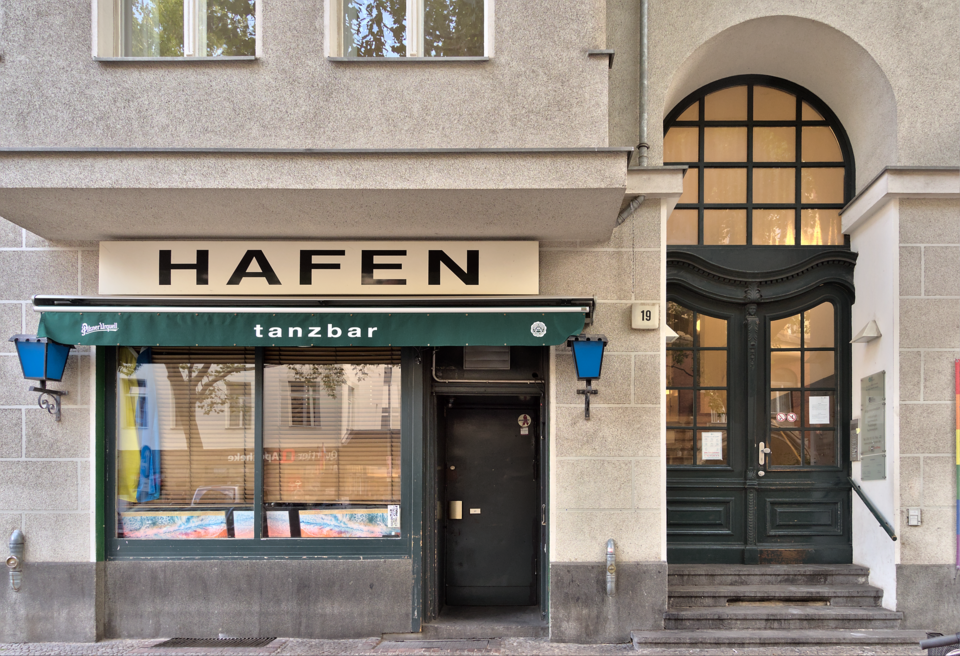
Berlin: start with Hafen
Berlin’s nightlife can become a conversation about endurance, door policies and how late everyone stayed out. I’m equally interested in the places where the evening begins with a conversation.
Hafen, on Motzstraße in Schöneberg, belongs in that picture. VisitBerlin describes it as a meeting place for gay Berliners and international regulars. Its own current programme includes Sunday disco sessions, Halloween events and a November birthday celebration: evidence of a bar continuing to give people reasons to gather. VisitBerlin · Hafen programme
What appeals to me is that continuity. A neighbourhood bar can hold different generations together without making a statement about it. Someone comes for the music; someone else comes because their friends will probably be there. I would leave room for that kind of Berlin.
London: a pint, a familiar face, another conversation
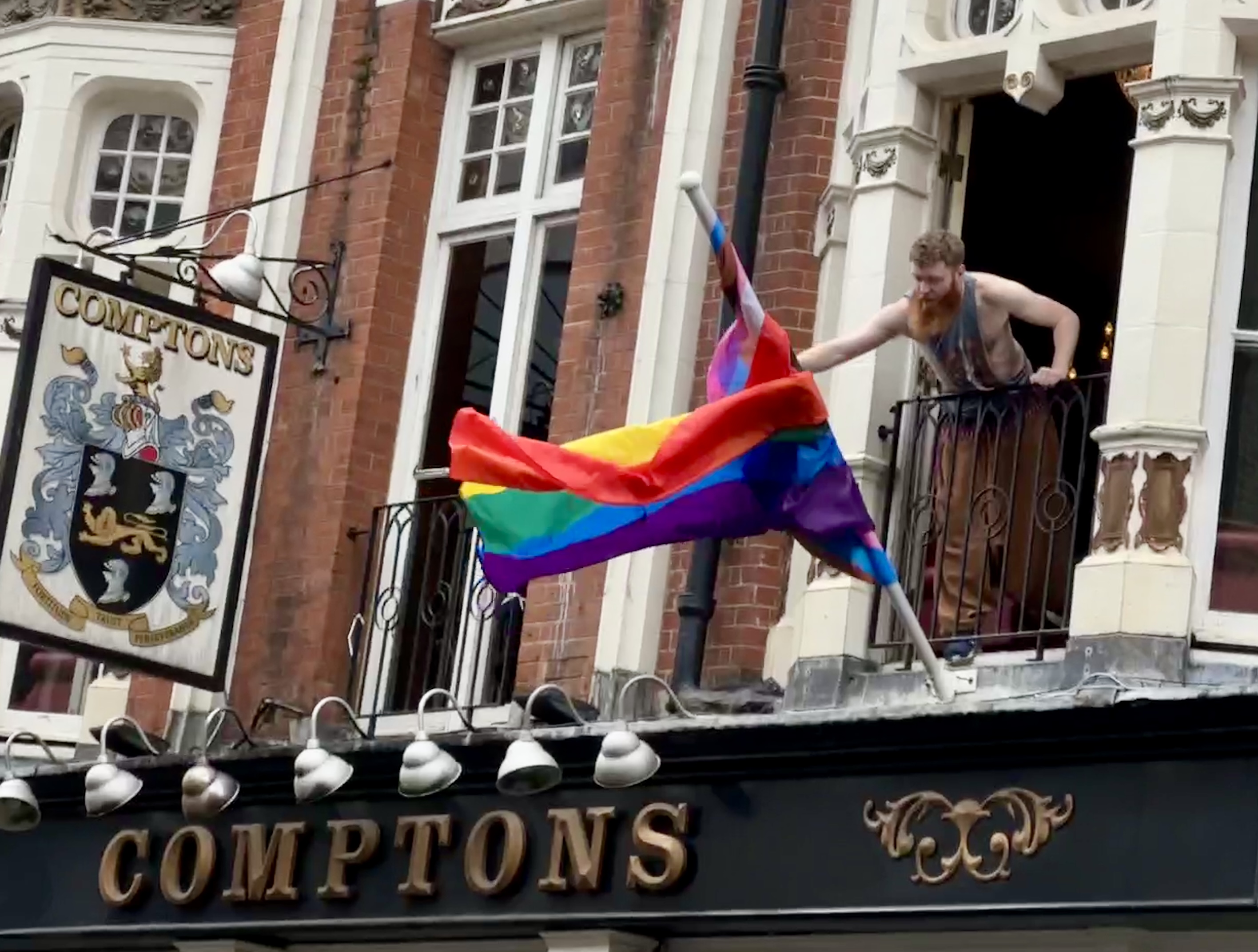
In Soho, Comptons and the Duke of Wellington offer two strong starting points.
Comptons, at 51–53 Old Compton Street, has been part of the gay scene since 1986. Its pub identity remains central, with live sport and entertainment alongside the drinks. The Duke of Wellington, on Wardour Street, combines its traditional pub setting with a programme that includes quizzes, drag bingo and weekend DJs. Both remain listed by London’s official visitor organisation. Comptons · VisitLondon: Duke of Wellington
I like the modest ambition of an evening that begins with a pint. Nobody needs to promise an extraordinary night. For a traveller arriving alone, a pub provides something useful: a place to settle before deciding what comes next. For the people who return regularly, it can become part of the rhythm of a week.
That everyday role deserves as much attention as London’s biggest dancefloors.
Paris: Freedj, and a reason to return midweek
At Freedj, 35 rue Sainte-Croix de la Bretonnerie, the connection between nightlife and community is visible in the programme.
Alongside its DJs and weekend basement club, the bar’s October calendar includes gatherings with LGBTQ+ sports associations. Its announced Front Runners evening also brings in queer novelist André E. Royer. Those details interest me because they show how a bar can connect people through something beyond the next round. Freedj · Current events
I would happily plan around an evening like that. We often describe the Marais through its reputation. A programme gives us something more concrete: people organising, performers working, associations meeting and a room being used. For me, that is a compelling reason to walk through the door.
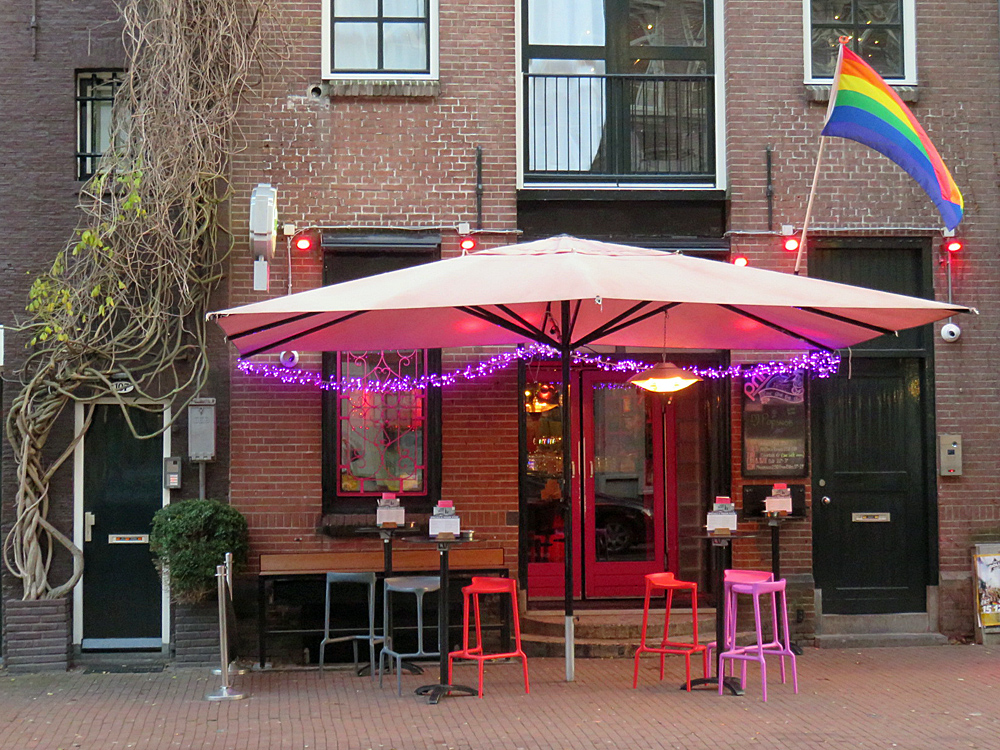
Amsterdam: PRIK and Spijkerbar, two different invitations
PRIK, on Spuistraat, offers cocktails, a terrace and a social setting that brings together locals, international residents and visitors. Recent Amsterdam tourism listings also document its October music events. PRIK · I amsterdam
Spijkerbar, on Kerkstraat, has a more explicitly sexual identity. Its official programme combines social occasions such as Saturday bingo with designated adult sessions and a clear no-camera policy. The character of the evening matters here; check the programme before choosing your visit. Spijkerbar
I value having those different possibilities. Some evenings I would choose an easy conversation over a cocktail. On another trip, I might want to explore a space with a different set of customs and boundaries. A city becomes more interesting when its queer bars allow us to want different things.
Madrid: the daily rhythm of Chueca
In Madrid, I would begin with D’Mystic, on Calle Gravina. Its café-bar format moves through breakfast, daytime drinks and evening cocktails. That matters to me. Queer life needs places where meeting someone does not depend on staying awake until morning. D’Mystic
For a more theatrical evening, LL Bar, on Calle Pelayo, is an established alternative. Madrid’s official tourism service identifies it as popular with the gay community and lists its drag and strip entertainment. Tourism Madrid
Together, these addresses suggest two ways of approaching Chueca: make time for an unhurried conversation, or choose a night organised around a performance. I would resist scheduling every hour. Part of the pleasure of a neighbourhood is allowing one meeting to change the rest of your plans.
Barcelona: Candy Darling and a wider queer conversation
Candy Darling, near Plaça Universitat, earns its place through a programme that reaches across music, performance and culture.
Time Out’s account describes a queer bar hosting activities including drag, poetry, comedy, exhibitions and book presentations. Recent visitor accounts also describe a mixed clientele, although experiences naturally differ between evenings. Time Out Barcelona · Visitor accounts
That range is what draws me. I want a gay magazine to remain curious about the wider queer community around us. A room where different audiences meet through a performance or a cultural event can offer another perspective on a city. Before going, I would check what is actually happening that night. At a programme-led bar, the event helps shape the room.
Brussels: Le Belgica and Le Dolores
For Brussels, Le Belgica and Le Dolores make a persuasive pairing.
Visit Brussels describes Le Belgica as a longstanding, compact meeting place with an international crowd and live DJs. Its account of Le Dolores emphasises electronic music and a cosmopolitan clientele. Both belong to the city’s established LGBTQ+ bar landscape. Visit Brussels
With La Demence approaching, I’m particularly interested in the smaller encounters around a big weekend. A drink before the party can become the moment you meet someone you recognise later on the dancefloor. It can also be the whole evening, and a perfectly satisfying one. I would make time for Brussels at bar level: fewer timetable decisions, more room to talk.
Milan: make time for Via Lecco
In Milan, my starting point would be Leccomilano and Mono, on Via Lecco in Porta Venezia.
Current gay travel listings continue to identify Leccomilano as a social meeting point and Mono as a queer-friendly bar centred on evening drinks and aperitivo. Published opening hours vary, so their current social channels are the practical check before visiting. Leccomilano · Mono
What interests me here is the possibility of building an evening around a neighbourhood rather than one destination. Meet for aperitivo. Give the conversation time. Decide together whether to stay, move on or make another plan. Travelling can make us impatient to reach the next attraction. I would rather leave enough space for someone to say, “Shall we have another?”
A place to begin
Across these eight cities, that is what I’m looking for: somewhere the evening can begin without demanding that we already belong to a group.
A bar cannot manufacture friendship. It can give us somewhere to practise the first steps: showing up, saying hello, returning.
The people who work in these places, organise their programmes and keep coming back help sustain a social world that is easy to take for granted. On my next journey, I want to make time for them.