Our Gay Movie DNA — One Film a Day
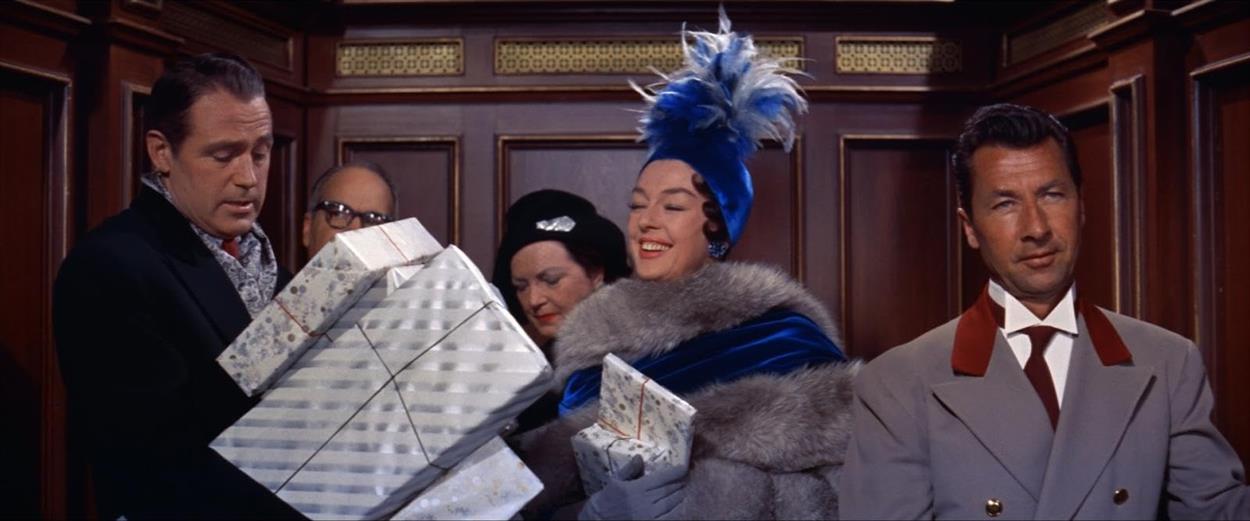
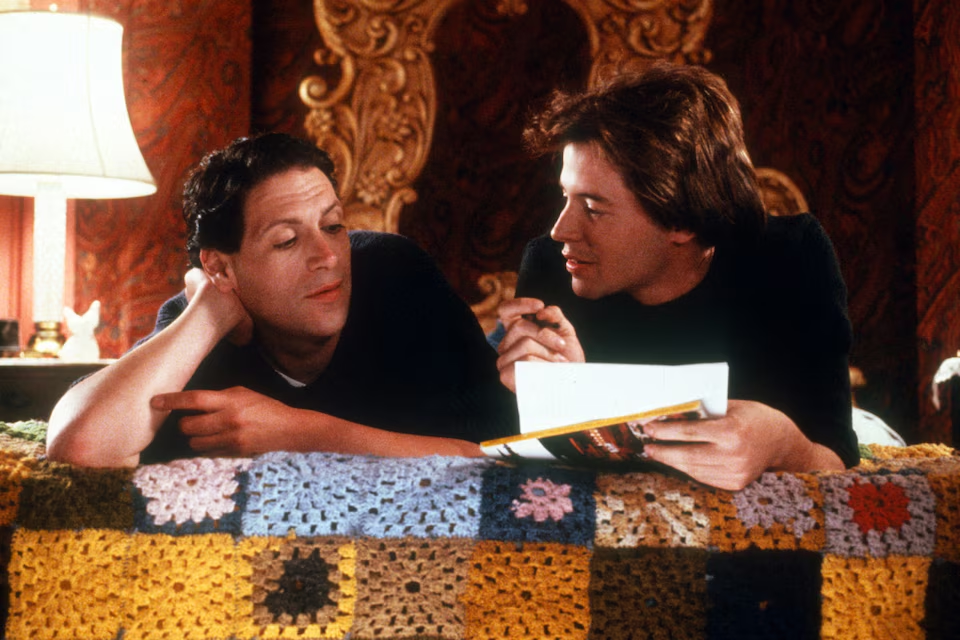
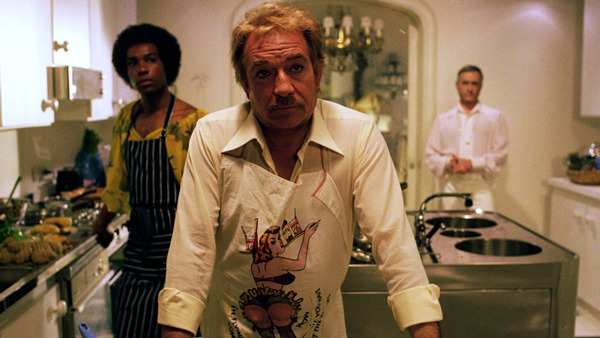
One film, every day. A shared collection of the performances, romances, outrageous comedies and queer stories we keep passing between us. I’m opening this daily column with Rosalind Russell’s Auntie Mame: a woman who makes room for a larger life.
This is a place to discover, revisit and disagree affectionately. Nobody needs a completed checklist to belong. Bring your favourite scene and pull up a chair.
Sunset Boulevard (1950): A Diva Deserves More Than Our Applause
I understand the temptation to meet Norma Desmond with a raised eyebrow and a borrowed dramatic gesture. She seems made for an entrance. But for tonight’s film, I want to linger after the entrance is over. Who is left in the room when the audience has gone home? And what happens when being admired becomes the only way a person knows how to feel real?
Those questions draw me towards Billy Wilder’s dark Hollywood story. Its glamour is irresistible; the loneliness behind it deserves just as much attention.
Hollywood looks into its own mirror
The BFI’s film record identifies the 1950 American production, directed by Wilder and written by Wilder, Charles Brackett and D. M. Marshman Jr. Gloria Swanson plays Norma, a former silent-screen star dreaming of a return. William Holden is Joe Gillis, the struggling screenwriter who becomes entangled in her carefully maintained world.
Wilder begins with Joe already dead, narrating the story in flashback. That opening removes any promise that glamour will protect these people. The question becomes how they arrive at disaster, and what each is prepared to accept along the way.
The person behind the pose
Erich von Stroheim plays Norma’s devoted valet. AFI Silver’s programme note points to the film’s unsettling use of a former silent-era filmmaker in that role, and describes Joe and Norma’s relationship as mutually exploitative. This is a household sustained by performances, including the performance of loyalty.
I find something particularly uncomfortable in that arrangement. Care can become a way of avoiding an honest conversation. Attention can be bought, negotiated or mistaken for affection. A grand room does not make any of those bargains less lonely.
Why I want Norma in our collection
My queer reading starts with the pleasure of excess: the poise, the gestures, the refusal to slip quietly into the background. Camp gives us ways of borrowing confidence from a performance larger than our own circumstances. There is real joy in that exchange, and I would never ask a film night to surrender it.
Yet I do not want our affection for a diva to depend on laughing at her age or her need to be loved. Norma is capable of cruelty; recognising her vulnerability does not excuse it. What interests me is holding both thoughts together. We can enjoy the spectacle while questioning the culture that teaches people their value disappears when the spotlight moves.
That feels relevant far beyond Hollywood. In communities where youth and desirability can become social currencies, I want us to notice who gets looked past. A shared film collection should sharpen our curiosity about people, including those whose best stories happened before we arrived.
Tonight I would invite the friend who loves a theatrical line and the friend who listens for what follows it. Let Swanson command the room. Then give the silence some attention, too.
Tonight’s conversation: which screen diva makes you laugh, and also makes you feel unexpectedly protective? Tell us at info@gaymafia.eu.
La Cage aux folles (1978): Who Gets to Call a Family Respectable?
I have a weakness for a dinner invitation that threatens to become a catastrophe. Not because humiliation is especially entertaining, but because the preparations reveal so much: whose photograph gets hidden, which gesture needs correcting, who is suddenly asked to become a quieter version of themselves. Before the guests arrive, somebody has already decided what counts as respectable.
That is the uncomfortable bargain beneath this wonderfully extravagant farce. Renato and Albin have a life together. Then the prospect of a socially acceptable marriage for Renato’s son turns their own home into a problem to be solved.
A household asked to disappear
Édouard Molinaro directed this 1978 French-Italian production, adapted from Jean Poiret’s play. Ugo Tognazzi plays Renato, who manages a Saint-Tropez nightclub; Michel Serrault is Albin, its star performer. When the deeply conservative parents of the son’s fiancée come to visit, the couple attempt to conceal the very life they have built. The Museum of Modern Art’s programme notes document the film’s theatrical origins and international success.
I find that premise worth lingering over. The absurdity is not simply that a household might be difficult to disguise. It is that love, work and years of shared domestic life can apparently become embarrassing evidence. So much energy goes into making strangers comfortable, and so little into asking what the performance costs the hosts.
The pleasure, and the questions
Serrault and Tognazzi give us two sharply contrasting presences around which the misunderstandings gather. The Criterion edition also credits Ennio Morricone’s music and Ambra Danon’s costumes for the two leads. Glamour is part of the film’s language, but its most interesting territory lies between the public performance and the private relationship.
I want to make room for both delight and disagreement when we bring this film into our collection. A comedy can open a door for an audience while carrying ideas that deserve scrutiny. What does it invite us to laugh at: someone’s femininity, the panic of being judged, or the exhausting theatre of conventional masculinity? Different viewers may answer differently, and that conversation belongs beside the laughter.
A family before anybody approves
For me, the strongest reason to return to this story is the couple’s place at its centre. They are not waiting for a stranger’s arrival to become a family. They already inhabit a complicated, working household, with attachments and responsibilities. Respectability arrives late and behaves as though it owns the place.
That is a feeling queer audiences can recognise without sharing every detail of Renato and Albin’s world. Perhaps you have softened a pronoun, edited an introduction or hesitated before bringing a partner to a gathering. I do not want to assume everyone has the same history. I do want our film nights to leave space for those small negotiations, and for the people tired of making them.
Tonight I would put this film on with friends who enjoy a good farce and friends ready to argue with one. Let the dinner unravel. Then ask who should have been apologising to whom.
Tonight’s conversation: when does a comedy make you feel included, and when does it leave you feeling like the joke? Tell us at info@gaymafia.eu.
Torch Song Trilogy (1988): The Right to Want a Whole Life
There is a kind of courage I want this column to celebrate: saying what you need without making yourself smaller first. Love. A home. A family. Respect from the people who claim to love you. These can sound like modest wishes, until somebody decides they are unreasonable because of who is asking.
That is what draws me to Arnold Beckoff, the New York drag performer at the centre of this film. His demands are wonderfully ordinary. The world’s difficulty in meeting them is where the story becomes political, painful and, sometimes, very funny.
A voice that will not disappear
Directed by Paul Bogart, the film was adapted by Harvey Fierstein from his own stage work. Fierstein also plays Arnold, alongside Anne Bancroft as his mother, Matthew Broderick as Alan and Brian Kerwin as Ed. The AFI catalogue documents its December 1988 American release and its origins in three interconnected one-act plays. That theatrical inheritance matters: conversations become contests over whose feelings get acknowledged.
I like the idea of putting Arnold at the centre of our film night because he resists a familiar bargain. Queer people are so often welcomed on condition that they remain entertaining, discreet or grateful. Here is a character whose wit does not cancel his need to be taken seriously. A joke can open a conversation; it should never be the price of admission.
Family is also a verb
TCM describes a story spanning nine years, following Arnold’s relationships, his difficult bond with his mother and his hopes of adopting a son. Romance sits beside parenthood and the work of building a home. That range is part of why I want the film in our collection.
For me, the interesting question is what family requires of us after we have used the word. Listening? Consistency? The willingness to recognise another person’s grief even when their life looks different from our own? Arnold’s story makes those questions feel immediate. Biology alone cannot answer them, and affection without respect can leave somebody desperately lonely.
More than a reassuring milestone
I would resist turning this into a comfortable story about how far everything has progressed. Its arguments about recognition still have work to do. Being visible does not guarantee being heard; being tolerated does not necessarily mean being loved well.
There is sadness here, including homophobic violence and bereavement, so this is a film night to approach with care. But I also want room for its humour, desire and stubborn appetite for connection. Queer cinema can hold all those things at once. We do not have to choose between the fabulous entrance and the person who goes home afterwards.
My invitation tonight is simple: give Arnold the attention he asks for, then bring the conversation back to the people around your own table. What does making somebody feel fully welcome actually involve?
Tonight’s conversation: which film first made you feel that a queer person could ask for a whole life? Write to info@gaymafia.eu.
Auntie Mame (1958): The Woman Who Makes Room for More
I can think of few better people to open a gay cinema column than Mame Dennis. She has the sort of presence that makes an ordinary room seem underdressed. But the invitation she extends is larger than glamour: what if a life could be organised around curiosity, generosity and the pleasure of being a little less afraid?
Rosalind Russell plays Mame in Morton DaCosta’s 1958 film, with a screenplay by Betty Comden and Adolph Green. The story follows an unconventional woman raising her orphaned nephew, Patrick. Russell had already played the role on Broadway; here, her performance turns the screen into a space that seems constantly on the verge of another entrance. Film credits: BFI.
The aunt I want at the table
What interests me is the way Mame’s exuberance becomes a form of hospitality. A striking outfit can attract attention; a welcoming person can change what that attention is used for. She makes a persuasive case for looking beyond the safe, respectable version of the world that other people have prepared for Patrick.
That is why I want her here. Queer belonging can begin with somebody making room before you know quite what to ask for. A relative, a friend, a teacher, the person who introduces you to a film: they do not need to explain your future to you. Sometimes they only need to show you that the choices are wider than you have been told.
Camp with a generous heart
The clothes, the theatricality and the delicious confidence are part of the pleasure. I would never ask anyone to approach Mame with solemn restraint. There is something wonderfully restorative about a character who seems to regard a dull gathering as an opportunity for immediate intervention.
Yet I would watch what happens beneath the spectacle. Excess can be selfish, but it can also be an invitation to share. The distinction matters to my reading of this film. I want a gay cultural inheritance that includes fabulous entrances and the kindness to notice who is still standing outside.
Watch it together
For this first film night, I would invite the friend who loves old Hollywood and the friend who thinks old films are homework. Let Russell make the introductions. Then ask a better question than whether Mame is a realistic role model: which part of her freedom would you like to borrow for your own life?
I would borrow her appetite for meeting people. And perhaps the confidence to turn an ordinary evening into an occasion without waiting for somebody else to declare it one.
Tonight’s conversation: who has made your world feel bigger? Tell us at info@gaymafia.eu.
Explore our original 32-film collection
I want to build a film night that starts with Auntie Mame opening a door and ends with a roomful of friends arguing about which masterpiece I have unforgivably left out. There should be laughter, a little longing, an extravagant entrance and at least one person insisting that the supporting actress stole everything.
When I talk about our gay movie DNA, I mean the films we pass between us: the reference someone explains over dinner, the character whose courage we borrow, the scene that makes a stranger feel like family. Nobody needs a completed checklist to belong. This is my invitation to a shared, wonderfully disputable film collection.
Some of these stories are explicitly queer. Others became ours through the way we watch them: recognising an outsider, loving a woman who refuses to become smaller, finding comedy in the performance of respectability. Here are 32 places I would start.
The women who taught us how to enter a room
1. Auntie Mame (1958)
Rosalind Russell’s Mame is the aunt I would put in charge of every timid family gathering: curious, excessive and unwilling to let convention decide how much life a person deserves. Morton DaCosta’s film makes generosity feel glamorous. Beneath the changes of costume sits something wonderfully serious: raising a child to welcome the world rather than fear it. Film details: BFI.
2. Sunset Boulevard (1950)
Gloria Swanson’s Norma Desmond commands attention so completely that it is tempting to remember only the grandeur. I want the sadness in the room too. Billy Wilder’s Hollywood nightmare asks what happens when being seen becomes the only way someone knows how to exist. Norma’s staircase belongs in our visual vocabulary; her loneliness deserves more than a knowing imitation. Film background: TCM.
3. What Ever Happened to Baby Jane? (1962)
Bette Davis and Joan Crawford turn a house into an emotional battlefield in Robert Aldrich’s psychological horror. Yes, the make-up and theatrical excess invite camp affection. But the cruelty is real within the story. I would watch for the terrifying distance between the person Jane imagines herself to be and the person her sister has to survive. Film and classification history: BBFC.
4. All About Eve (1950)
Every friendship group needs someone who understands Margo Channing. Bette Davis gives ambition, insecurity and wit the same magnificent posture in Joseph L. Mankiewicz’s backstage drama. For me, its pleasure lies in the moment politeness stops concealing competition. A dinner party after this screening could become dangerously articulate. Cast and background: Criterion.
5. The Women (1939)
George Cukor assembles a world of gossip, status and romantic manoeuvring without a man appearing on screen. Norma Shearer, Joan Crawford and Rosalind Russell make this an irresistible companion to the later diva battles. I would invite everyone to pick their favourite performance, then defend their choice with entirely unnecessary passion.
6. Mommie Dearest (1981)
Faye Dunaway’s portrayal of Joan Crawford has acquired an enormous camp afterlife. The film, adapted from Christina Crawford’s memoir, is also about alleged abuse and a child’s terror. I want space for that discomfort alongside its extravagant reputation. Loving a performance does not require treating every scene as a punchline.
7. Death Becomes Her (1992)
Meryl Streep and Goldie Hawn weaponise vanity in Robert Zemeckis’s gloriously grotesque comedy. It is a perfect late-night choice for friends who can appreciate an immaculate outfit surviving an increasingly disastrous body. I love the idea of confronting our terror of ageing through something this absurd, vicious and beautifully artificial.
Respectability can wait: bring on the spectacle
8. The Wizard of Oz (1939)
Judy Garland follows a road away from the familiar and finds companions whose apparent deficiencies do not stop them becoming a family. That is the part I would carry into a gay film collection: the hope that somewhere beyond the place that defined you, people will recognise what you have been all along.
9. Cabaret (1972)
Liza Minnelli’s Sally Bowles is dazzling company, but Bob Fosse makes the darkness beyond the stage impossible to ignore. I would programme it for its uneasy combination of seduction and political warning. A room can feel liberated while the world outside is becoming dangerous. The music does not make that contradiction disappear.
10. The Rocky Horror Picture Show (1975)
Tim Curry’s Frank-N-Furter turns an arrival into an event. Jim Sharman’s musical belongs on this list for the gleeful instability of its world: desire, costume and identity refusing to sit quietly in their assigned chairs. Best watched with people willing to enjoy being ridiculous, without requiring anyone to perform for the group.
11. Victor/Victoria (1982)
Julie Andrews, Robert Preston and Blake Edwards make a comedy out of the rules by which an audience thinks it can identify a performer. I would pair its elegance with Rocky Horror’s unruliness. Both invite us to notice how eagerly people believe a role once the clothes, voice and setting seem convincing.
12–13. La Cage aux folles (1978) and The Birdcage (1996)
Édouard Molinaro’s film, with Ugo Tognazzi and Michel Serrault, and Mike Nichols’s American remake, with Robin Williams and Nathan Lane, make an ideal double bill. The farce turns on a demand many queer people recognise: please become less yourself so somebody else feels comfortable. Under the chaos, I see a couple defending the home and family they have made.
14. The Adventures of Priscilla, Queen of the Desert (1994)
Stephan Elliott sends Terence Stamp, Hugo Weaving and Guy Pearce across Australia in a bus carrying considerably more personality than most luxury hotels. The costumes deserve their own applause. I would also keep an eye on the friction between the travellers: chosen family can be impatient, bruised and argumentative while still being worth the journey.
15. To Wong Foo, Thanks for Everything! Julie Newmar (1995)
Patrick Swayze, Wesley Snipes and John Leguizamo take drag into a small-town American road movie directed by Beeban Kidron. Some of its language and assumptions belong to its period. Its generosity makes it a rewarding companion to Priscilla: another invitation to imagine glamour as something people can share.
16. Absolutely Fabulous: The Movie (2016)
Edina and Patsy had to be here. Jennifer Saunders and Joanna Lumley bring their spectacularly unreliable friendship to Mandie Fletcher’s film. I would start the evening with episodes of the original television series, which began in 1992, then move to the movie. The film is a bonus round; the series is where their shared language takes root. Film credits: British Council.
The boys, the longing and the possibility of a life
17. Another Country (1984)
Rupert Everett and Colin Firth inhabit the enclosed world of an English public school in Marek Kanievska’s drama. Desire exists inside a system obsessed with class, loyalty and appearances. I would put it before Maurice: two different films that make beautifully kept institutions feel unbearably restrictive. Film details: BFI.
18. Maurice (1987)
James Ivory’s adaptation of E. M. Forster, with James Wilby, Hugh Grant and Rupert Graves, gives romantic yearning room to breathe. I want it in this collection for its belief that love can require an actual change of life. The beauty matters, but the question beneath it matters more: what would you risk to live honestly? Film details: BFI.
19. Torch Song Trilogy (1988)
Harvey Fierstein’s Arnold belongs at the emotional centre of this guide. Paul Bogart directs Fierstein’s adaptation of his own stage work, with Anne Bancroft and Matthew Broderick. Here are love, a difficult mother and the wish to build a family. I would watch for the determination to ask for affection without agreeing to be diminished in exchange. Cast and synopsis: TCM.
20. My Beautiful Laundrette (1985)
Stephen Frears’s film, written by Hanif Kureishi, lets the relationship between Omar and Johnny occupy a world shaped by money, racism and family expectations. Gordon Warnecke and Daniel Day-Lewis give the attraction a compelling charge. I want stories in our collection that understand desire has a postcode, a class position and a complicated working day.
21. Beautiful Thing (1996)
Hettie Macdonald’s film makes room for young love on a south London housing estate. Glen Berry and Scott Neal give its central relationship a tenderness that sits beautifully beside the surrounding noise and humour. This would be one of my choices for someone who wants recognition without being told that queer romance must end in punishment.
22. Happy Together (1997)
Wong Kar-wai takes Tony Leung and Leslie Cheung to Buenos Aires for a relationship that cannot find a stable temperature. I would save this for an evening when everyone can sit with contradiction. Wanting someone, hurting them and imagining a different beginning are painfully capable of occupying the same heart.
23. Brokeback Mountain (2005)
Ang Lee gives Heath Ledger and Jake Gyllenhaal a love story measured against the lives their characters believe they must lead. I would resist reducing it to an important milestone. Watch the pauses, the withheld gestures, the effort of continuing an ordinary conversation when something enormous cannot be said.
24. Weekend (2011)
Andrew Haigh follows two men, played by Tom Cullen and Chris New, through a brief encounter that becomes a searching conversation. I like its scale for this collection. Recognition does not always need a dramatic historical setting: sometimes it arrives in the awkwardness of asking a near-stranger what they believe about love.
25. Moonlight (2016)
Barry Jenkins follows Chiron through three stages of his life in Miami. What I want beside the big speeches and magnificent entrances is this film’s attention to quietness: the things a person protects, the tenderness they struggle to accept, the possibility of being met without having to explain everything. Film and cast: A24.
The family album is bigger than one kind of gay man
26. Paris Is Burning (1990)
Jennie Livingston’s documentary belongs here with the names of its participants attached: Pepper LaBeija, Dorian Corey, Willi Ninja, Venus Xtravaganza and the wider ballroom community. Black and Latinx queer and trans people are the authors of the culture on screen. I want viewers to hear their ambitions and accounts of survival before borrowing another expression from them. Film and participants: Criterion.
27. All About My Mother (1999)
Pedro Almodóvar’s world makes room for grief, performance, motherhood and people who assemble care from imperfect circumstances. Cecilia Roth, Marisa Paredes, Antonia San Juan and Penélope Cruz give this collection a different kind of ensemble. I would put it near the end of a marathon, when the conversation is ready to become more tender.
28. Women on the Verge of a Nervous Breakdown (1988)
Another Almodóvar is essential to my version of the shelf. Carmen Maura anchors a comedy in which emotional catastrophe acquires colour, rhythm and a spectacularly eventful apartment. This is my choice for the friend who wants cinema to make heartbreak look stylish enough to survive.
29. Hedwig and the Angry Inch (2001)
John Cameron Mitchell’s musical gives a wounded, unruly performer the force of a rock concert. I want its difficult hunger in the collection alongside more reassuring stories. A stage can become a place to invent yourself and a place where the invention starts falling apart. The songs carry both possibilities.
30. But I’m a Cheerleader (1999)
Jamie Babbit uses candy colours and deliberately artificial surroundings to expose the absurdity of trying to train desire out of someone. Natasha Lyonne and Clea DuVall bring warmth to the satire. A gay man’s cultural education can happily include lesbian love stories; our shared library becomes much more interesting when it does.
31. Pride (2014)
Matthew Warchus’s film, inspired by the solidarity between lesbian and gay activists and striking miners in 1980s Britain, is the one I would use to bring a room back together. Its pleasure is in watching people discover that another community’s struggle can become their responsibility too. Joy has political possibilities.
32. The Celluloid Closet (1995)
Rob Epstein and Jeffrey Friedman’s documentary, drawing on Vito Russo’s work, is a useful final screening. After all those stars, lovers and coded glances, it asks us to consider how Hollywood taught audiences to recognise—or misrecognise—queer people. I would finish here, then return to the beginning with sharper eyes.
My first film night? Start with Mame
I would open with Auntie Mame, follow with Torch Song Trilogy on another evening, and leave room for a wildly opinionated Death Becomes Her night. A serious film collection should survive someone laughing too loudly in front of it.
These 32 films are a beginning. There are other countries, other generations and whole queer traditions still to bring into the conversation. I want readers to tell us which film found them at the right moment—and which omission they are prepared to forgive only after a very good explanation.
Send your additions to info@gaymafia.eu. Bring a title, bring a memory, bring your most unreasonable affection. There is room on the sofa.
Further viewing and editorial notes
This is an editorial selection, not a ranking or a complete history. Some films contain violence, abuse, racism, homophobia or dated stereotypes. Years refer to the original film, with Paris Is Burning dated 1990 by Criterion and its festival archive (US theatrical release: 1991). Availability varies by territory.
For a broader starting point, explore the BFI’s 2016 LGBTQ+ film poll and its individual contributors’ selections. Their rankings are separate from the opinions expressed here.