MEMORIES · SPAIN
Four lost pages by Lorca become Spain's queer box-office phenomenon
Ninety years after Federico García Lorca was killed, *La bola negra* has taken almost €30m in Spanish cinemas. The film is built on the surviving pages of his unfinished play about a young man rejected by a Granada club for being gay. It opens in UK cinemas next week.
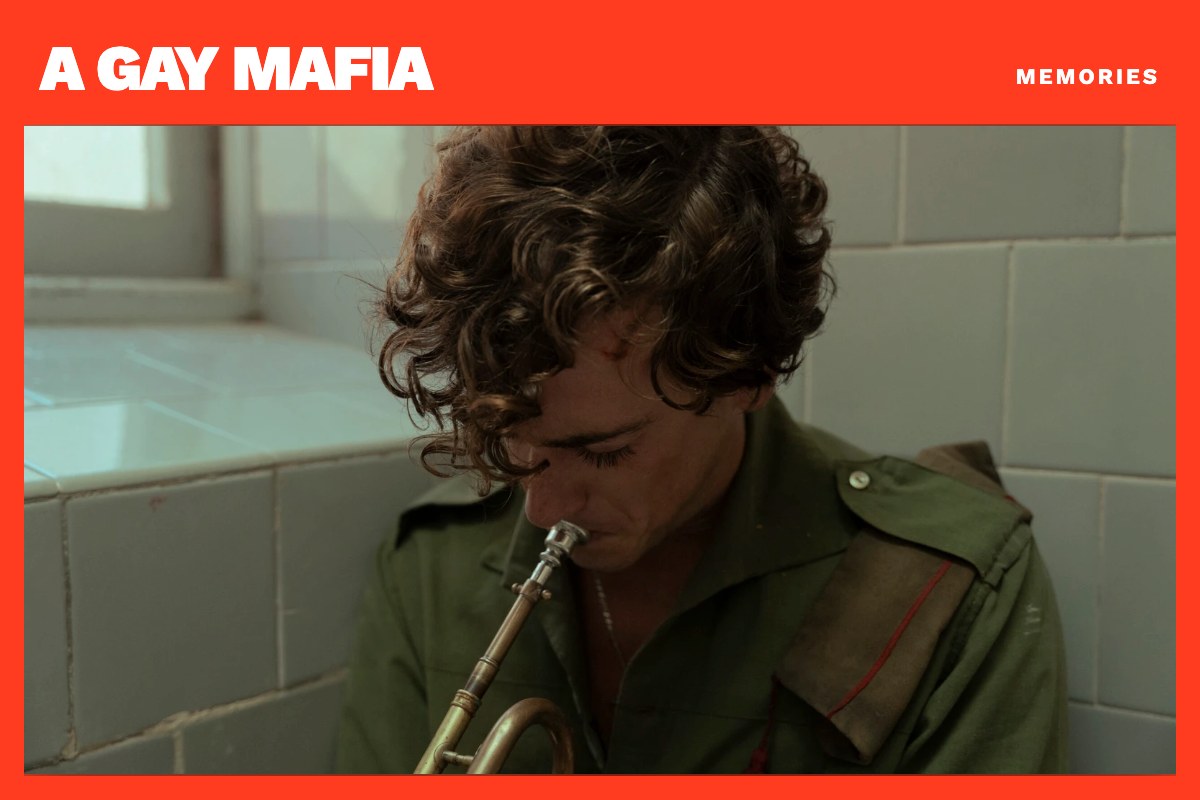
La bola negra, the film by Javier Calvo and Javier Ambrossi (Los Javis) inspired by an unfinished play by Federico García Lorca, had taken €29,933,735 in Spain by the weekend of 16–18 October. That makes it the twelfth most-watched Spanish film in history, with more than 4.2 million admissions, eCartelera reported on 22 October. It opened on the weekend of 25–27 September with €4,814,581 (eCartelera). In May it shared the Best Director prize at the 79th Festival de Cannes with Paweł Pawlikowski's Fatherland (Festival de Cannes). Netflix released it in US cinemas on 16 October and will stream it from 2 December (El Tiempo/EFE). UK cinemas follow on 6 November (PinkNews).
The play Lorca never finished
The film's starting point is four pages. Lorca began La bola negra in early 1936 (Público) and subtitled it "drama de costumbres actuales", a drama of present-day customs. Its premise is a young man seeking admission to a club in Granada. Members vote with white and black balls, and he receives a black one because he is homosexual (UNIR). Lorca outlined the plot in a letter to the theatre director Cipriano Rivas Cherif, but only the opening pages survive (UNIR).
That summer the Spanish Civil War broke out. Lorca, born in Fuente Vaqueros in 1898, was shot near Alfacar, outside Granada, in August 1936. Wikipedia gives the date as 19 August. He was 38.
The man with the three Rs
The film also draws on Alberto Conejero's 2013 play La piedra oscura, about Lorca and Rafael Rodríguez Rapún (La Nación). Miguel Bernardeau plays Rapún in the 1937 strand (PinkNews). Rapún was a Madrid mining-engineering student who joined Lorca's touring university theatre, La Barraca, as its secretary in 1933. Lorca called him "las Tres Erres", the three Rs, after his initials (El Salto). After Lorca's death he joined the Republican army. He was wounded in an air attack during the offensive on Santander and died there in a field hospital on 18–19 August 1937, a year almost to the day after Lorca (El Salto; Wikipedia). He was long considered a muse of the Sonetos del amor oscuro. Documents revealed in 2012 point instead to Juan Ramírez de Lucas, so the question remains open (Wikipedia).
Three eras, one black ball
Los Javis widen Lorca's fragment into three timelines, set in 1932, 1937 and 2017. Penélope Cruz and Glenn Close are in the supporting cast (Festival de Cannes). In 1932 a young man named Carlos is voted out of an exclusive club over rumours that he is gay. In 2017 a queer historian digs into his family's silence (PinkNews). The scene Lorca managed to write before he was killed now plays to millions in Spain, nine decades later.
Sources
Facts, dates and prices in this article were checked on 28 October 2026 against the official and press sources linked in the text. Promoters' and companies' claims are attributed to them. Details can change, so check the official links before you travel or buy tickets.