BERLIN · CLUB CULTURE
Rosa Berlin: Can a Kink Club Make Room for Tenderness?
A new sex-positive venue is asking a surprisingly tender question: what if a night out made room for the people who arrive feeling vulnerable, too?
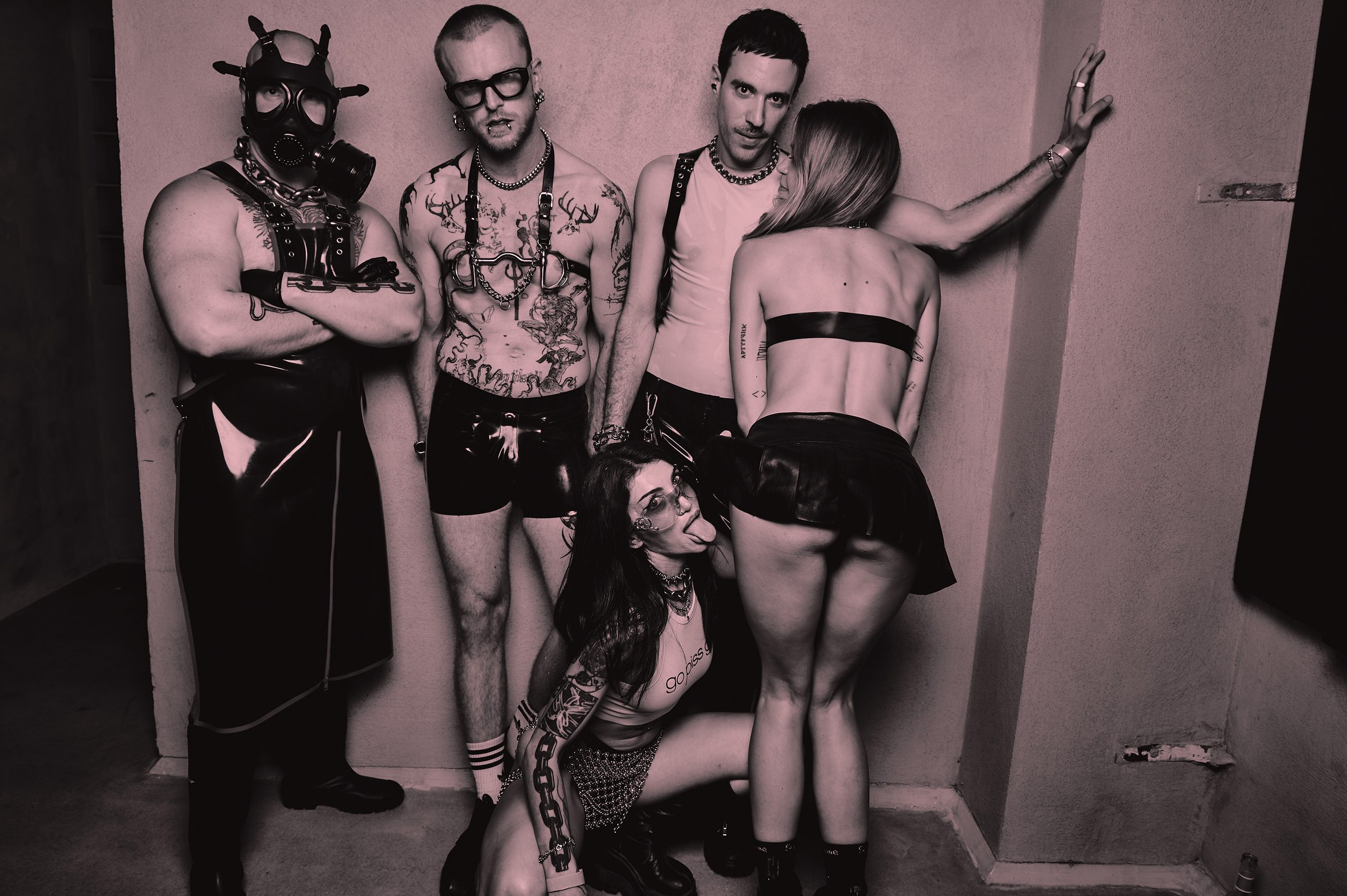
I love the anticipation of a new club. A different door, a different room, the possibility that somebody has found another way for us to spend a night together. But the older I get, the less interested I am in being impressed by a room before I know what it asks of the people inside it.
That is why Rosa has caught my attention. The Berlin venue’s promise invites a conversation about how a club can accommodate desire, curiosity and the need for company. I have not visited. What follows is a look at its published intentions, the practical information available now, and the questions I would take with me.
A softer kind of threshold
In a 30 September interview with Siegessäule’s Florian Bade, Karl from the Rosa team describes a venue that opened on 12 September 2026 in the former Mensch Meier. Pink interiors and different spaces for socialising and play are presented as an alternative to a uniformly intimidating club environment. The address given is Storkower Straße 121.
The interview’s most compelling idea is emotional: people do not always go out because they feel invincible. Sometimes they want friends nearby. Karl describes staff training, an approach based on harm reduction, and support for promoters developing their own community events. These are the team’s accounts of its work, rather than findings from an independent inspection.
Bade also asks whether the queer-friendly language amounts to branding. That scrutiny is welcome. A colour scheme can communicate an invitation; whether people feel respected depends on what happens after they enter.
Queer-friendly needs to mean something specific
Rosa’s own website describes a sex-positive club and cultural space welcoming a mixed audience, including queer and trans people. It says a safeguarding team works through the night and places consent and personal boundaries at the centre of its approach. This is the venue’s stated policy; the website cannot tell us how every guest experiences it.
I would not describe a mixed venue as automatically less queer, or assume that a queer label makes every room comfortable for everybody. The question is how a particular night is organised: whose needs shape the door, who feels able to ask for help, and whether somebody’s refusal is treated as an ordinary part of being there.
That last point matters to me. Freedom becomes much more convincing when it includes the freedom to watch, to take a break, to change your mind or to leave. Nobody should have to perform adventurousness to earn a place in a room.
The party matters as much as the address
The official calendar checked on 26 October lists Klub Verboten: Halloween Special on 31 October, 22:00–06:00; RE:CODED on 13 November, 22:00–08:00; and LIBIDOH on 14 November, 23:00–08:00. Each has an organiser-linked ticket page. Confirm the details there before travelling.
Pornceptual also appears, but its date is displayed as “00.00” on Rosa’s calendar. I would not turn that placeholder into a confirmed date. It is a small example of why a nightlife guide should make uncertainty visible rather than smooth it away.
These listings suggest a venue whose identity will be shaped by individual promoters. For a visitor, that is a reason to choose a specific event thoughtfully. A club name is the beginning of the research, not the end of it.
Arriving alone should not feel like an audition
Rosa’s FAQ says solo visitors are welcome. Entry is strictly 18+, with ID required; dress codes depend on the event. It advises buying ahead for most nights and checking individual listings for exceptions.
For anyone planning around access needs, there is an important qualification. The About page says full accessibility specifications are still forthcoming and describes work on step-free access, accessible toilets and quiet spaces. That is not enough information to promise a fully accessible visit. Contact the venue about your particular requirements before committing to a journey.
I am drawn to places that make the practical questions easier to ask. What should I wear? Can I come alone? Is there somewhere quieter? Being able to find an answer helps a person decide whether the night is right for them. A confident community can make room for those questions without treating them as a failure to understand the scene.
What would make me want to return
The most interesting part of Rosa’s proposition is the possibility that softness can be a serious design choice. Somewhere to sit and talk can matter as much as a spectacular dancefloor. A staff member who listens can shape the memory of a night more profoundly than the photograph everyone recognises afterwards.
I want to discover whether that promise holds in practice. For now, Rosa belongs in my Berlin notebook as a new space worth following with curiosity. The question I would carry through its door is simple: does this room let people arrive as they are, including on the nights when they do not feel extraordinary?
If the answer is yes, that would give us something worth travelling for.
Sources and planning your visit
This original editorial feature draws on Florian Bade’s interview with Karl of the Rosa team for Siegessäule, 30 September 2026, alongside Rosa’s About page, FAQ and official calendar, checked on 26 October 2026. This is an editorial preview, not an attendance review. Times, access arrangements and admission policies can change.